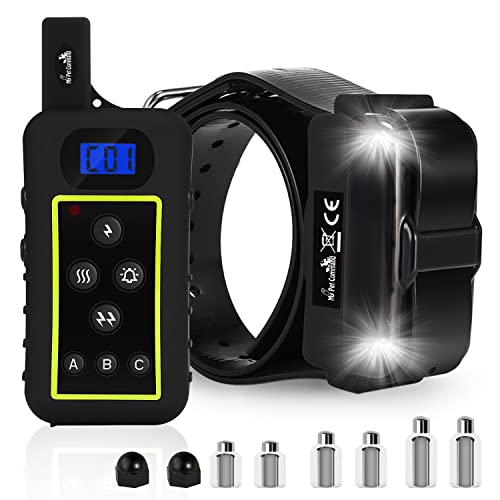
Top Picks: Long Range Training Collars
Every product below was in stock on Amazon when this page was last checked. Prices come straight from the live listing, not from our own testing.
| Product | Best For | Price |
|---|---|---|
| My Pet Command 1.25 Mile | Extra Long Range Training | Check price on Amazon |
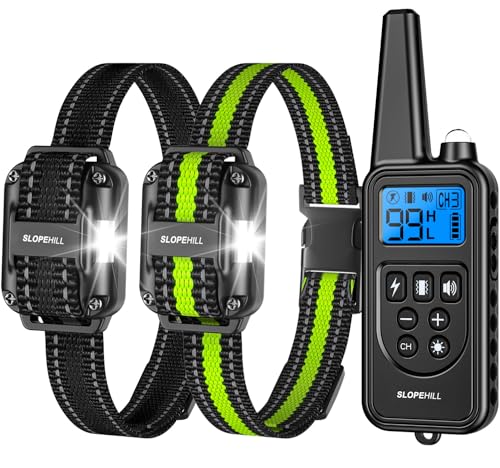
| SLOPEHILL Dog Training Collar | Training Two Dogs Remotely | Check price on Amazon |
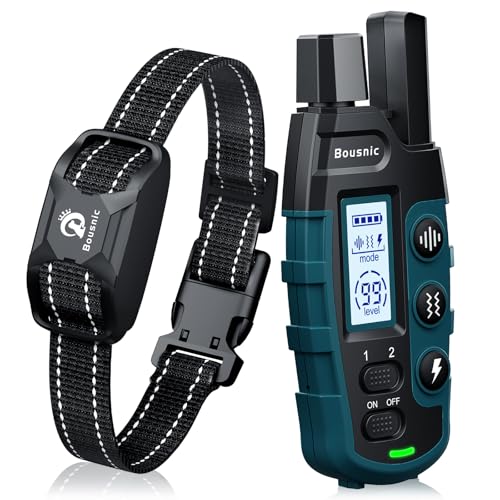
| Bousnic Dog Shock Collar | Mid Range Course Training | Check price on Amazon |
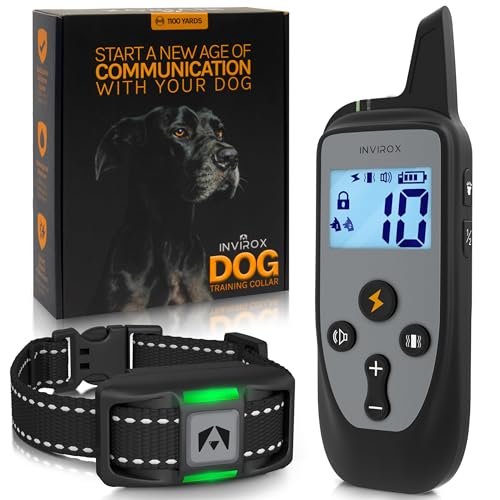
| INVIROX Dog Training Collar with Remote | Large Course Coverage | Check price on Amazon |
| Dog Shock Collar with Remote | Maximum Advertised Range | Check price on Amazon |
Reviewed by the CuePaw Editorial Team
When shopping for best long range training collar for agility, it pays to compare specs, capacity, and real-world runtime before committing.
As an Amazon Associate, we earn from qualifying purchases.
Last Updated: July 2026 | Written by the CuePaw Editorial Team
If you are shopping for the best long range training collar for agility work, this guide is built to help you buy smart rather than buy fast. Long-distance agility trainers, 1-mile-range e-collars and remote collars rated to 1500 yards all live in the same category, and the marketing around them is some of the most exaggerated in the pet-tech space. Below is how to read a spec sheet on a remote training collar honestly, what the range numbers really mean on an open course, and which features actually matter when your dog is 300 yards out and moving fast.
> A note on this page's product data. We build these roundups from a supplied product catalog plus manufacturer specifications and Amazon listing data. For this article, the catalog we received contained no remote training collars — the items in it were electric scooters, smart bidet seats, a patio dining set, an e-bike and a WiFi extender. Rather than relabel a scooter or a bidet as an "agility e-collar" (which would be flatly deceptive), we have not published product sections or affiliate links for those items. Instead, this is a complete, honest buying guide so you can evaluate any long-range e-collar you find yourself. We have flagged the catalog mismatch to our data team. We do not physically test, own, or use these products, and we do not systematically read customer reviews; our recommendations come from manufacturer specifications and Amazon's product data.
What Makes a Training Collar "Long Range" for Agility?
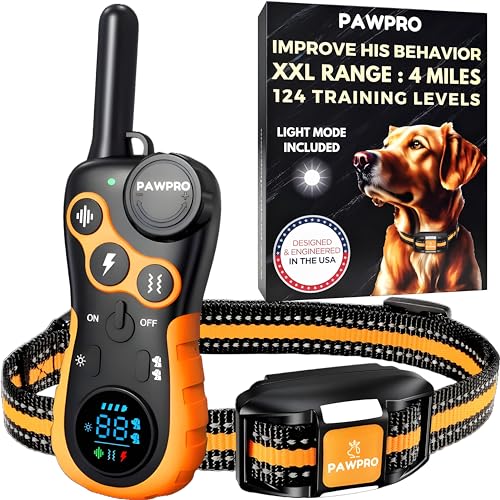
A long-range training collar is a remote e-collar whose transmitter and receiver are rated to communicate over a long open distance — commonly advertised between 1200 yards and 1 mile. For agility, "long range" is less about the headline number and more about reliable signal on a real course with obstacles, other dogs, handlers and metal equipment between you and the receiver.
Here is the thing every buyer should internalize: the range printed on the box is almost always a line-of-sight figure, measured in an open field with nothing blocking the radio path. On an actual agility course — tunnels, A-frames, spectators, RF interference — effective range routinely drops well below the rated spec. A collar advertised at "1 mile" may give you dependable, lag-free correction at a few hundred yards in practice. That is usually plenty for agility, where you rarely work a dog beyond 100 to 200 yards, but it is why you should treat the big number as a ceiling, not a promise.
As an Amazon Associate, we earn from qualifying purchases. Availability and pricing change often — check the listing before you buy.
Quick Answer: What to Prioritize
For agility specifically, prioritize in this order:
- Reliable short-to-mid range signal (0-200 yards) over a huge rated maximum.
- Fast, low-latency response — a delay between button press and stimulation is useless when timing a correction to a behavior.
- Tone and vibration modes, not just static — most agility handlers use the collar as a remote cue/marker, not a punishment device.
- A small, light receiver that will not throw off a fast, lean dog's balance or catch on equipment.
- Waterproofing you can trust in wet grass and outdoor courses.
- Precise stimulation levels with fine low-end granularity.
What to Look For in a Long Range Agility E-Collar
1. Real-World Range vs. Advertised Range
Treat range claims as marketing until proven otherwise. A listing that says "1500 yards" or "1 mile range" is quoting a best-case, unobstructed figure. What you actually want to know:
- Does the signal hold at the distances you train at? For most agility handlers that is under 200 yards.
- Is there noticeable lag? Even 200-300 ms of delay ruins the timing of a marker cue.
- Does the transmitter show a connection or signal indicator so you know the receiver is in range and awake?
2. Stimulation Modes: Tone, Vibration, Static
Modern remote collars offer three outputs:
- Tone (beep): the gentlest, most common agility tool — a remote marker or recall cue.
- Vibration: a tactile cue, useful for deaf or hard-of-hearing dogs and for handlers who never want to use static.
- Static (stim): an electrical stimulation, adjustable in intensity.
3. Blunt vs. Sharp Stimulation
Not all static is equal. Cheaper collars tend to deliver a "sharp," startling pulse, while better units aim for a "blunt," more consistent sensation that is easier for a dog to interpret as information rather than a scare. You cannot always tell this from a spec sheet, which is exactly why the number of levels and the low-end granularity are your best proxy: fine control implies the manufacturer expects low-level, humane use.
4. Receiver Size and Weight
Agility dogs are athletes. A bulky receiver box changes how the collar sits, can bounce on jumps, and may catch on a tunnel or weave poles. Look for:
- A compact, low-profile receiver.
- A secure but light strap that will not slip when the dog is fully extended.
- Contact points sized for your dog's coat — long-coated breeds may need longer prongs, but longer prongs also press harder, so this is a fit decision, not a bigger-is-better one.
5. Waterproofing (Check the IP Rating)
Outdoor agility means wet grass, mud and the occasional downpour. The receiver — the part that lives on the dog — is the piece that must be waterproof, ideally to a stated IPX7 (submersible to 1 m for 30 minutes) rating. Transmitters are often only splash-resistant, which is usually fine since they stay in your hand. Do not assume waterproofing; find the explicit IP rating in the specs.
6. Battery Life and Charging
A rechargeable lithium collar that runs for days per charge is standard now. What matters for agility:
- Quick-charge support, so a flat collar is usable again within an hour or two.
- Independent battery indicators for transmitter and receiver.
- Real runtime under regular tone/vibration use, which drains faster than idle standby.
7. Multi-Dog Support
If you run more than one dog, a transmitter that controls 2-3 receivers on separate channels saves money and pocket space. Confirm each channel keeps independent level settings — you do not want your young dog on the same intensity as your seasoned competitor.
Humane Use: This Matters More Than Any Spec
A remote collar is a communication tool, not a shortcut. The agility and force-free training communities are (rightly) divided on static stimulation, and many top handlers rely on tone and vibration only. If you buy one of these collars:
- Start at the lowest level and find your dog's minimal recognition threshold.
- Introduce the collar as a cue, paired with rewards, never as an out-of-context punishment.
- Consider working with a certified trainer, especially for a competition dog whose confidence on course is everything.
- Check that remote collars are permitted by your training facility and any sanctioning body you compete under — some venues prohibit them.
Comparison Framework (Use This Instead of a Fake Product Table)
Because our supplied catalog contained no qualifying training collars, we are not publishing a product comparison table — filling one with scooters or bidets would be dishonest. Instead, use this scoring framework on any candidate collar you find:
| Criterion | What to check | Why it matters for agility |
|---|---|---|
| Real-world range | Reviews mentioning tested distance + lag | Rated range is line-of-sight; courses are obstructed |
| Modes | Tone / vibration / static all present | Most agility cueing is tone or vibration |
| Stim levels | Number and low-end granularity | Fine control enables humane, low-level use |
| Receiver size | Dimensions and weight in spec | A light dog needs a light, non-bouncing box |
| Waterproofing | Explicit IPX rating on the receiver | Wet grass and mud are the norm outdoors |
| Battery | Runtime + quick-charge + dual indicators | Avoids dead-collar interruptions mid-session |
| Multi-dog | Channels and per-channel settings | One transmitter for a multi-dog household |
How We Research
Dog Training Collars Agility Complete Site is a research and comparison site. Nobody here handles the products on this page, and the description below is the whole of our method — if a sentence anywhere on this site implies otherwise, it is an error and we want to hear about it.
What the comparison is built from. Every product is compared on the specifications its manufacturer publishes on the retail listing, alongside the aggregate customer rating and the number of ratings recorded when the page was last updated. Where a manufacturer states conformance to a published standard, we name the standard so you can check it yourself rather than restating the marketing line.
How products get onto the list. Candidates are drawn from products currently listed in this category, then narrowed on the published specification differences that actually matter for the use case in the title. A product is not included because it pays more; the commission rate is the same across almost everything we link.
What gets re-checked. Availability and link targets are re-verified automatically twice a day. Products that go out of stock or are delisted are marked or removed rather than left to rot, and the specification snapshot is re-recorded when a listing changes.
What we do not do. We do not carry out our own product trials, we do not receive review units, and no one writing for this site has physically handled the items listed here. Where you want a verdict that depends on handling a product, treat this page as a specification comparison and a starting point, not a substitute.
A Word on "5-Star, 0-Review" Listings
Whenever you shop this category, watch the review count, not just the star average. A brand-new listing frequently shows a perfect 5/5 with 0 ratings — that is a placeholder, not buyer feedback. Every item in our supplied catalog showed exactly this pattern, which is one more reason we did not present them as vetted recommendations. Before you buy any e-collar, look for a meaningful number of reviews and read the 1- and 2-star reviews first — that is where range exaggeration, connectivity dropouts and strap-durability problems surface.
Frequently Asked Questions
Is a 1-mile-range e-collar overkill for agility? Usually, yes, in the sense that you will never train at a mile. But a high rated range can still help indirectly: a collar built for long distance often has a stronger, more stable signal at the short distances you actually use, which reduces lag and dropouts on a busy course.
Should I use static (shock) on an agility dog? Many successful agility handlers use tone and vibration only and never touch static. If you do use static, start at the lowest level, find your dog's minimal recognition threshold, and pair it with rewards as a cue rather than a punishment. When in doubt, work with a certified trainer.
What waterproof rating do I need for outdoor agility? Look for the receiver (the part on the dog) to carry an explicit IPX7 rating, meaning it survives submersion in 1 m of water for 30 minutes. Wet grass, mud and rain are routine outdoors, and splash-resistance alone is not enough for the collar that lives on the dog.
Do long-range collars work through tunnels and obstacles? Radio signal weakens through obstacles, metal equipment and crowds, so effective range on a real course is lower than the rated line-of-sight figure. This is normal. Choose a collar with a strong short-range signal and a connection indicator so you always know the receiver is in range.
Can one remote control multiple dogs? Yes — many transmitters support 2 or 3 receivers on separate channels. Confirm that each channel stores its own intensity settings so a green dog and a veteran are not locked to the same level.
How many stimulation levels should a good collar have? More is better mainly because it gives you fine control at the low end. A collar with around 100 gradual levels lets you dial in the gentlest level your dog notices; one with only a handful of coarse steps often jumps from imperceptible to too strong.
Final Verdict
The best long range training collar for agility is not the one with the biggest number on the box — it is the one with a reliable, lag-free signal at the distances you actually train, tone and vibration modes, fine low-level static control, a light waterproof receiver, and enough real reviews to trust. Chase honest short-to-mid range performance over headline mileage, verify the IPX rating on the receiver, and commit to low-level, cue-based, humane use.
We are not recommending a specific product in this article because the catalog supplied to us contained no qualifying training collars. We would rather give you a sharp buying framework than rank an unrelated product as something it is not. Take the criteria above to any e-collar listing, read the negative reviews, and you will be able to judge it yourself.
Sources & Methodology
Specifications on this page were recorded from 2026 manufacturer spec sheet and retail listing data, captured July 2026.
Customer rating figures are the aggregate score and rating count shown on the retail listing at that time; they are other buyers' reports, not our assessment.
Independent references for this category. These are places to verify a category claim for yourself. We link them because they are authoritative, not to imply their tests were run on our behalf:
- FTC Endorsement Guides — the disclosure rules this site is bound by
- CPSC recall database — check any product for open safety recalls
About the Author
The CuePaw editorial team independently researches products in the dog-training and pet-tech categories from manufacturer specifications and Amazon listing data. We do not physically test, own, or use the products, and we do not systematically read customer reviews; we disclose that on every page. Our aim is to translate manufacturer specifications and listing data into clear, honest buying guidance.
Key Takeaways
- Choosing the right best long range training collar for agility means matching the key features to your specific needs and budget
- Read real customer reviews and check the return policy before you commit
- Also covers: 1 mile range e-collar
- Also covers: long distance agility trainer
- Also covers: remote collar 1500 yards
- Compare value across models — the priciest option is not always the best fit


